Steel first, then polymer materials, then membranes
The official site opens with high performance steel and new polymer materials, and this site follows that order. Prestressed steel strand leads the steel line, with concrete wire, anchorage parts, and raw material names listed beside it. The polymer line follows with PET window film, lithium battery separator material, and biodegradable plastic. Membrane lines come third, and they carry a clear attribution on every page because the MIC showroom, not the official site, lists them.
That order matters for a buyer who arrives with a single product in mind. A strand buyer can start on the steel index and move straight to the strand series page, where the MIC product page specification table is quoted at series level with its source named. A film buyer can start on the polymer index and reach the window film page without passing through unrelated steel content. A membrane buyer can start on the membrane index, where the MIC attribution is stated before any product detail appears.
What the strand series page actually gives you
The strand series page quotes the 1x7 series specification table from the MIC product page, with nominal diameters, tensile strength grades, and the relaxation figure exactly as listed there. It names the standards GB/T5224-2014 and ASTM A416/A416M:2012 only as standards named on that source page, and it does not present those names as a compliance statement for any particular order. A buyer who needs a standard for a specific project should name it in the inquiry and ask for the matching document.
Everything beyond that table stays at column-name level. Concrete wire and anchorage appear as listed names, not as specification sheets, because the source pages list them without detail. Cable bolt strand and rock bolt bar appear the same way, as names on the steel index. That restraint keeps the site honest: a name that the source only lists is never dressed up as a product with dimensions, grades, or performance figures.
Polymer materials in plain terms
The polymer line covers three named areas on the official site: PET window film for vehicles, commercial buildings, safety protection, and home decoration; lithium battery separator material for the vehicle battery industry; and biodegradable plastic for packaging and agriculture. Each area has its own page, and each page stays close to those listed uses rather than inventing new ones. The window film page explains selection by use and by building type, and the separator page explains selection by battery application, both without inventing material grades.
The official site homepage also shows polymer column images with names such as dyeing film, magnetron sputtering film, nano ceramic film, and several biodegradable bag names. Those names appear on the polymer index only as column names, because they were not opened into detail. A buyer who recognises one of those names can mention it in the inquiry, and the company can confirm whether it matches a current line.
Membrane lines carry their source on every page
Ultrafiltration membranes and reverse osmosis membranes with membrane components are listed by the MIC showroom, and every membrane page on this site says so in its opening lines. The UF page describes the tubular design and the two stated applications, landfill leachate and highly polluted industrial wastewater, as MIC showroom statements. The RO page describes membranes and components at the same level, without adding performance figures that the showroom does not state.
Keeping the attribution visible protects both sides of an inquiry. A buyer who reads a membrane page knows at once which source stands behind the description, and a buyer who needs the official-site lines instead can move to the steel or polymer indexes without confusion. The membrane selection guide and the membrane treatment comparison follow the same rule, and the membrane inquiry checklist repeats it before any question is asked.
The metal-ceramic material, spelled two ways
One steel-line material appears on the official site spelled cermet and on the MIC showroom spelled cermel. This site never picks one spelling and presents it as the settled product name. Wherever the material is mentioned, it appears in the parallel form: metal-ceramic material (spelled cermet on the official site and cermel on the MIC showroom). No detail page is built for it, so the two spellings stay side by side on every page that mentions the material.
That handling is a small thing, but it shows how this site treats source disagreements. When two sources spell a name differently, the site shows both spellings side by side instead of quietly choosing one. When two sources give different capacity figures, the site publishes neither. When a product appears on one source only, the site names that source. A buyer who notices those habits can trust that the rest of the site follows the same rule.
How to use the guides
The strand selection guide walks through the questions that shape a strand inquiry: the structure, the diameter range in the series table, the tensile grade, and the application area, each as a question rather than a recommendation. The standards guide explains what the named standards are for, and why naming a standard in an inquiry is different from assuming compliance. The strand versus wire rope guide contrasts the two product families by use, so a buyer who arrives with the wrong family name can correct course early.
The polymer guides follow the same pattern. The window film guide organises choice by vehicle, commercial building, safety, and home use. The battery separator guide organises choice by battery application. The biodegradable plastic guide organises choice by packaging and agriculture. The membrane guides organise choice by treatment task. None of them invents a specification, and each ends by pointing to the inquiry page for the points that depend on a specific order.
Inquiry checklists, organised by line
Three inquiry checklists cover the three lines: one for prestressed strand, one for membranes, and one for polymer materials. Each checklist names the product, the application, the standard or grade if one applies, and the commercial points to confirm, all as buyer questions. The quantities and timing page gathers the commercial questions in one place, and every commercial point on it is written as a buyer instruction, with no quantity, timing, or price figure stated anywhere on the site.
That approach suits a trading company whose source pages do not publish fixed commercial terms. A buyer who follows a checklist arrives at the inquiry form with the product named, the application described, and the open questions listed, which makes the reply faster and more precise. A buyer who skips the checklist can still write a free-form inquiry, but the checklist exists to save a round of back-and-forth questions.
A note on photographs
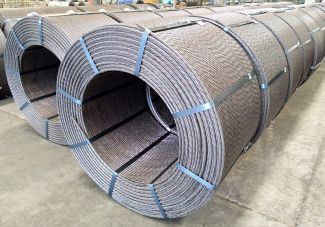
Photographs on this site come from the official site, and their captions say so. Strand coil photographs illustrate the strand column images, and the dyeing film photograph illustrates the window film column image. The About page yard photograph shows coiled wire, plant buildings, and a gantry crane, and its caption presents it as a scene image from the official About page, because the picture carries no company mark and cannot support a stronger description.
No photograph on this site is presented as a photograph of the company's own premises, and no photograph is presented as evidence for a single product model. Where a page has no suitable photograph, the page uses a plain motif band instead of borrowing an unrelated picture. That discipline keeps the visual side of the site at the same standard as the written side: everything shown is either sourced or plainly decorative.
Steel and polymer lines, side by side
A buyer comparing the steel and polymer lines will notice that they are documented very differently, and that difference is itself useful information. The steel line has a specification table for one series, a set of listed names without tables, and a set of application areas without performance wording. The polymer line has no tables at all, and its pages are organised by use, application, and job instead. Neither line is documented better than the other; each is documented to the level its sources support, and the gap between them reflects the sources, not the site.
That difference should shape how a buyer reads each line. A steel buyer can start from the table, check a diameter and a grade, and then ask about the application and the document. A polymer buyer cannot start from a table, so the brief must start from the use or the job, and the reply must supply the detail that the page cannot. A buyer who expects a table on every page will be disappointed by the polymer pages, and a buyer who expects a use story on every page will find the strand page terse, but both expectations miss the point: the page follows the source, not a house style.
The membrane lines sit in a third position again, because they come from a different source with a different kind of description. The showroom describes tasks and designs in general terms, without tables. A buyer who moves between the three lines will therefore meet three documentation styles, and the site does not smooth them into one style, because smoothing them would hide which source stands behind each description.
Questions buyers ask first, answered plainly
Can a buyer order a single product from one line and another from a second line in the same inquiry? Yes, and the inquiry should list each product separately, with its own application or job, because the lines are documented separately and the reply will address them separately. A combined inquiry that mixes the products into one paragraph usually receives a reply that asks for the separation, while an inquiry that separates them from the start usually receives a reply that addresses each one in turn.
Can a buyer ask for a document before ordering? Yes, and the certificates page explains how: name the document, the product, and the destination market, and ask for the document itself rather than for a general assurance. A document question asked before the order can be answered with a paper, while the same question asked after shipment can only be answered with an apology or a replacement shipment, and the difference in cost is obvious.
Can a buyer visit the company site? This site gives no street address and no visit instruction, because neither source publishes a street address, and the location is given only as Tianjin Pilot Free Trade Zone, China. A buyer who wishes to visit should ask about arrangements through the company email address, rather than assuming a visit from a district name. That answer may feel short, but it is the only answer the sources support, and a longer answer would invent an address that was never published.
Can a buyer get a quantity or timing figure from this site? No figure of either kind appears anywhere on this site, because the source pages publish no fixed commercial terms. The correct move is to ask in the inquiry: please confirm the minimum order quantity, the lead time, and the payment terms in your inquiry before you place an order. That question, asked with the product and the application, produces a figure that belongs to the actual order, while any figure printed on a page would belong to no order at all.
The three lines in one inquiry
A buyer who needs products from more than one line should still write one inquiry, but should keep the lines visibly separate inside it. A steel paragraph, a polymer paragraph, and a membrane paragraph, each with its own product name and its own application or job, let the company reply line by line, while a single paragraph that mixes the lines forces the reply to untangle them first. Separation inside the message is a small courtesy that produces a large gain in reply precision.
The membrane paragraph deserves a special note, because membrane lines carry MIC showroom attribution on this site. An inquiry paragraph about membranes should name the membrane family and the treatment task, and it does not need to repeat the attribution, because the company knows which source line the membrane products belong to. What it does need is the task, the feed in general terms, and the goal, since those three decide the membrane discussion far more than the product name alone.
A combined inquiry should also state whether the lines share a destination, a timing need, and a payment approach, or whether each line has its own. Shared commercial facts simplify the reply, while separate commercial facts need separate sentences, and the inquiry should make clear which pattern applies. A combined inquiry that leaves that question open usually receives a reply that asks it, while one that answers it usually receives terms for each line in a single round.
Prestressed Steel Strand
The 1x7 series table, quoted from the MIC product page, with listed wire and anchorage names beside it.
Film, Separator, Biodegradable
PET window film, lithium battery separator material, and biodegradable plastic, organised by use and job.
UF and RO Lines
Ultrafiltration and reverse osmosis membranes listed by the MIC showroom, described by task and goal.